Ghost Halloween Seamless Pattern
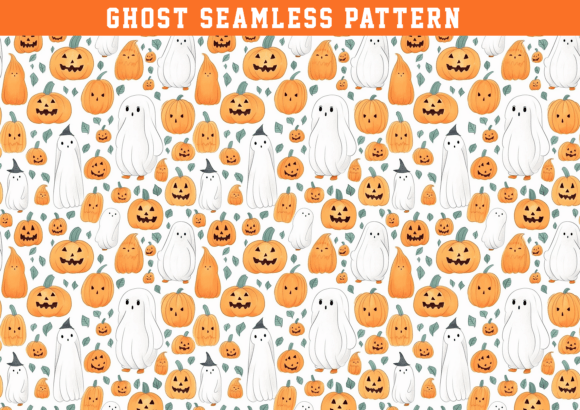
When a new seamless pattern lands on my review desk, I immediately picture it stitched onto something real. The Ghost Halloween Seamless Pattern stopped me for a moment—not because it’s overly complex, but because it strikes a very specific, cozy balance between playful spooky and soft autumn warmth. I opened the JPG file, zoomed in on the repeating ghosts, tiny pumpkins, and scattered fall leaves, and my first thought was: this would make a wonderfully approachable embroidery project for someone who wants festive but not frightening.
As a designer who evaluates graphics for actual embroidery use, I’m not just looking at whether the art is cute. I’m asking: will this read well after it’s been stitched onto a textured fabric? Will the shapes hold up under thread tension? Does the design feel purposeful enough to carry a finished product? The Ghost Halloween Seamless Pattern brings a lot of personality, but it also demands a thoughtful approach before you commit needle to fabric. Here’s what I found when I mentally ran it through my typical embroidery workflow.
First Impressions: Playful Meets Polished
Right away, the mood feels like a crisp October evening. The ghosts have soft, rounded shapes with just enough personality to feel cheerful rather than eerie. The pumpkins are small and well-placed, and the fall elements give it a Thanksgiving-adjacent flexibility that could stretch the selling season well past October 31st. The seamless repeat is smooth, which is essential if you’re planning to use it as a continuous background motif on a garment or home textile. I could easily see this pattern as the star of a boutique dish towel set or a custom baby onesie for a family’s first Halloween.
The overall layout is medium-density: enough detail to feel intentional, but not so cluttered that it would turn into a muddy mess under thread. In embroidery terms, that’s a strong starting point. Busy seamless patterns can become visual noise on fabric, but this one holds its structure because the ghosts and pumpkins are sized generously relative to the spacing. That gives you room to isolate individual motifs if you want to use only part of the design.
Real-Life Scenario: A Custom Embroidered Tote Bag
To test the pattern in my mind, I imagined a client request: a natural canvas tote bag with a wide embroidered panel featuring the Ghost Halloween design. The client wants it for a fall craft fair, something that looks handmade but professional enough to sell for $35–$40. The tote is medium-weight, stable, and forgiving—exactly the kind of surface where a seamless pattern can shine.
I’d take a section of the JPG, digitize the ghosts and pumpkins as a combined appliqué-and-satin-stitch design, and then use a light fill stitch for the background leaves. The repeat would need to be carefully aligned on the hoop, but since it’s a seamless file, I can tile it manually in my digitizing software. The result would be a tote that feels like a designer purchase, not a last-minute craft kit. Customers would pick it up, smile at the little ghost faces, and immediately think of their own Halloween traditions. That emotional hook is what moves products from a table to a shopping bag.
How the Pattern Performs on Different Products
I always test a design across multiple product types in my head before I recommend it. Here’s where the Ghost Halloween Seamless Pattern fits naturally, and where it might need a little extra help.
Where It Belongs
- Kitchen towels and tea towels: The repeating ghosts and pumpkins feel like a vintage flour sack print. Stitch a 5x7 patch on a cotton towel and it’s instantly giftable.
- Baby apparel: Onesies, bibs, and tiny sweatshirts. The soft theme works for little ones, and parents love seasonal outfits that aren’t over-the-top.
- Pillow covers: A 16-inch linen pillow with a centered embroidered panel using this pattern would anchor any fall porch bench.
- Aprons: For a baker who loves Halloween, a half-apron with the pattern stitched across the bottom hem is charming and unexpected.
- Patch sets: Pull out individual ghosts and pumpkins to create a mini iron-on patch collection—perfect for Etsy sellers who want to offer mix-and-match options.
Use With Caution
- Small hoop sizes: The seamless nature means you need enough space to show at least two full repeats, or the pattern loses its rhythm. A 4x4 hoop can feel cramped if you try to cram too much in.
- Stretchy fabrics: On a thin cotton tee, the density of a full repeat might cause puckering unless you use a heavy cutaway stabilizer and a light stitch density setting.
- Dark fabrics: The ghosts rely on a light fill to pop. On a black sweatshirt, you’ll need to adjust the thread colors—make the ghosts a warm cream, not pure white, and the pumpkins a rich orange to avoid a washed-out look.
- Curved surfaces like caps: The pattern’s repeat can get distorted on a curved front panel. Consider using a single motif instead of the full seamless layout.
Stitching Clarity and Visual Impact
One of the biggest questions I ask is: will the details survive the needle? The ghosts are simple shapes with minimal interior detail, which is a good thing. Satin stitch borders around each ghost would give them a clean, outlined look that reads well from a distance. The pumpkins have a few lines, but they’re broad enough to translate into short running stitches or a small fill without becoming a thread nest. The fall leaves are the trickiest part—they add texture, but if you shrink them too much, they might blur. I’d keep the leaves at least half an inch wide in the final embroidery file.
From a customer’s perspective, the pattern has a strong “recognizable seasonal” quality. Someone browsing an Etsy shop or craft fair table will spot those ghost faces and immediately connect with the holiday. That recognition builds trust and makes the product feel like a thoughtful purchase, not a generic item. For a small business, that kind of instant visual communication is gold.
Practical Embroidery Designer Notes
Before you turn this digital Graphics file into a finished embroidery project, here are the steps I’d take based on real experience:
- Test on scrap fabric first. Yes, it’s a JPG, not a ready-to-stitch file. You’ll need to digitize it or use it as a reference for manual digitizing. Run a test stitch-out on a similar fabric to what you’ll sell.
- Check thread color contrast. The original art has soft, earthy tones. When you pick thread, go a shade brighter than the screen image—ambient light on fabric dulls colors slightly.
- Review stitch density. A seamless pattern can become dense quickly. If you’re stitching a large area, adjust the fill pattern to a lower density to keep the fabric soft and prevent stiff panels.
- Confirm hoop size. This pattern works best in a 5x7 or larger hoop. If you only have a 4x4, consider stitching a single ghost and pumpkin cluster instead of the repeat.
- Inspect small details in the JPG. Zoom in on the pumpkins’ faces and the ghost eyes. If any detail is less than 1mm wide in your intended stitch size, it may disappear or become a blob.
- Test in black and white mockups. Convert the JPG to grayscale and see if the contrast holds up. If the ghosts and pumpkins blend together, you’ll need to adjust the shades in your digitizing.
- Compare light and dark fabric backgrounds. The pattern’s mood shifts dramatically on a natural linen versus a dark charcoal. Choose the background that matches your brand’s aesthetic.
- Use proper stabilizer. For towels and apparel, a medium-weight cutaway stabilizer supports the stitch without adding bulk. For tote bags, a tear-away may work if the design is low-density.
Licensing and Commercial Use
Since the product description states you receive a ZIP file with a JPG, it’s essential to clarify how you can use it. The listing doesn’t specify commercial terms, so I always advise designers to reach out to the seller and confirm. If you plan to embroider this pattern on items you sell—whether on Etsy, at craft fairs, or in a boutique—you need to know whether the license allows for physical finished products. Many digital Patterns come with a personal-use-only license, while others include a small commercial allowance. Don’t assume. A quick message to the shop owner can save you a headache later.
If you’re using the pattern as a design asset for printable mockups, digital previews, or branding, the same caution applies. The file is high resolution, so it will look crisp on screen, but double-check that you’re not distributing the original JPG in a way that violates the terms.
Final Thoughts on the Ghost Halloween Seamless Pattern
This pattern caught my attention because it’s genuinely usable. It’s not a complicated, multi-layered illustration that would drown in thread; it’s a thoughtful, repeating design that feels like it was made for cozy autumn textiles. For an embroidery designer or small business owner, it opens up a whole range of products—from kitchen towels to baby apparel to limited-edition tote bags—without requiring a massive time investment in digitizing.
The seamless repeat is clean, the characters are endearing, and the seasonal flexibility (Halloween through Thanksgiving) stretches your selling window. Just remember to digitize with care, choose your fabric intentionally, and run a thorough test before you stitch the final product. In the right hands, the Ghost Halloween Seamless Pattern can become the kind of embroidery project that customers come back for year after year.