Mandala Coloring Page Graphics & Coloring Pages Amp
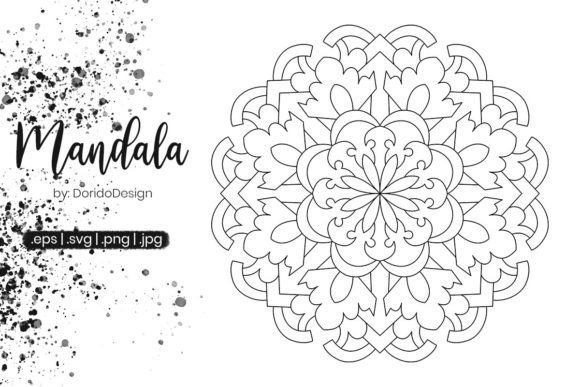
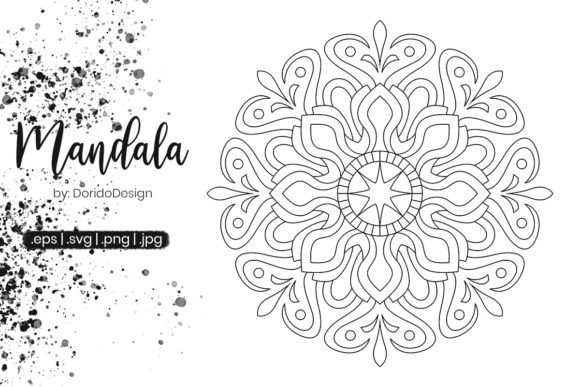
When a client in the wellness and lifestyle space approached me with a mood board full of global influences—Moroccan tiles, Turkish ceramics, Indian textile patterns—I knew immediately the visual direction needed a unifying element that felt both ancient and adaptable. That’s when I started testing a Coloring Book Page, Mandala asset from the Coloring Pages Amp category. The file promised a Flower Mandala with vintage decorative elements and a rich blend of Islamic, Arabic, Indian, Moroccan, Spanish, Turkish, Pakistani, Chinese, mystic, and Ottoman motifs. As a graphic designer who regularly works with printable products, brand identity, and surface pattern design, I needed to know if this Graphics asset could hold its own in a real commercial project, not just as a line-art curiosity.
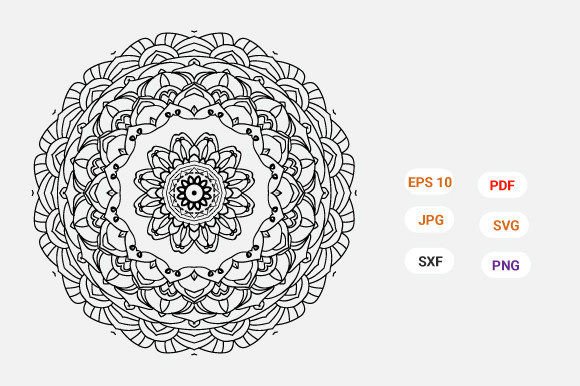
My first impression was one of layered intricacy. The mandala doesn’t simply sit on the page; it pulls you in with concentric layers of petals, geometric weaves, and delicate ornamental details. The vector illustration feels hand-drawn yet precise, with the kind of organic imperfection that makes a design asset feel artisanal rather than machine-generated. The mood evokes a quiet, meditative depth—perfect for projects that need to whisper “heritage,” “craftsmanship,” or “spiritual connection” without shouting. It immediately reminded me of the decorative borders in old Ottoman manuscripts, the carved plaster of Andalusian architecture, and the henna patterns seen in South Asian celebrations. That cross-cultural resonance is exactly what makes this creative design asset so versatile, but also something you must handle with cultural sensitivity.
The Visual Mood and Cultural Impression
This is not a one-note floral. The combination of vintage decorative elements and oriental pattern vocabulary reads as simultaneously sacred and ornamental. The motifs borrow from a wide spectrum: the geometric stars of Islamic art, the arabesque curves of Mughal decoration, the rhythmic repetition of Chinese latticework, and the bold symmetry of Moroccan zellige. When you place this Coloring Book Page, Mandala into a layout, it instantly adds a sense of time, story, and global awareness. For a brand that wants to signal authenticity, natural ingredients, meditative practices, or artisanal production, this single graphic design asset can anchor a visual identity.
However, the cultural breadth is a double-edged sword. If you use it in a project that merely borrows these motifs for surface-level exoticism, the result can feel inauthentic. I always advise clients to understand the visual language they’re adopting. For a recent project—a small-batch tea brand that sources directly from family farms in India and Turkey—the mandala became a unifying symbol on the packaging, echoing the art traditions of both regions. It deepened the brand story rather than decorating it.
Client Project Fit: From Printable to Premium Branding
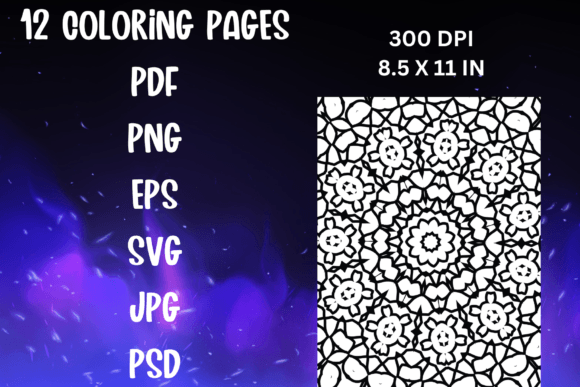
I tested this Graphics asset across several use cases. The most obvious is as a coloring book page itself—a printable product for Etsy, KDP low-content books, or a freebie lead magnet. The line work is sufficiently complex to appeal to adult colorists, yet the compound shapes are large enough to color with pencils, markers, or even light watercolor washes. For a printable design seller, this file is ready to package and resell, provided the commercial license allows it.
But I pushed further. I converted the vector into a gold foil stamping file for a luxury candle label. The mandala, scaled to fit the lid, created a stunning unboxing moment. I used a simplified version—removing some inner detail—as a repeating pattern on tissue paper. For a holistic wellness center, I placed the mandala as a subtle watermark behind their treatment menu, a use that falls squarely into editorial design and brand identity. I even tested it as a white ink graphic on a dark tote bag, a print-on-demand product concept that performed beautifully. For crafters and Cricut users, the SVG version (if available) cuts cleanly and can be used for vinyl decals, etched glass, or stenciled fabric.
Where This Mandala Graphics Asset Shines
This Flower Mandala graphic truly excels in medium-to-large applications where its detail can be appreciated. It works wonders as a product mockup overlay—imagine it debossed on a leather journal cover or printed on a silk scarf. In social media graphics, it adds a rich, ornamental backdrop for quotes, event announcements, or product launches without overwhelming the text if you adjust opacity or layer placement. For packaging design, it elevates boxes, hang tags, and wrapping paper. In canva templates, it provides an instant upgrade to Pinterest pins, Instagram story backgrounds, and digital invitations. As a sticker design or sublimation design for t-shirts and mugs, it appeals to the boho, spiritual, and festival markets.
I also found it remarkably effective as a supporting element in logo design—not as the primary logomark, but as a container or surrounding frame for a brand name. Paired with a handwritten or serif font, it creates a premium, soulful aesthetic. For small business branding in the handmade, yoga, skincare, or artisanal food sectors, this asset can become the subtle thread that ties together a creative marketplace presence.
Situations That Demand Caution
Despite its beauty, this design asset is not universally applicable. At very small sizes—like a favicon, app icon, or tiny social media badge—the intricate lines collapse into a muddy blur. Always test the mandala at the smallest intended reproduction size before committing. In crowded layouts with multiple competing elements, it can overwhelm the visual hierarchy and make the design feel chaotic. I learned this the hard way when I tried to use it as a full-background pattern behind dense text on a brochure; readability suffered. Now I use it either as a large focal point with plenty of negative space, or as a very faint, low-opacity layer.
It also struggles in extremely minimalist or corporate environments. If your brand voice is sharp, clean, and tech-driven, this mandala will feel out of place. The vintage and oriental character clashes with modern sans-serif austerity. For modern design that leans toward Swiss typography or brutalist layouts, this asset is simply too decorative. Similarly, for projects that demand a very clear, unambiguous visual message—like safety signage, corporate reports, or legal documents—it risks undermining credibility.
Another nuance: because the motifs draw from multiple cultural sources, you must avoid blending them in a way that trivializes any tradition. I always research the specific symbolism of the patterns I’m using and, when possible, consult with someone from that cultural background. This is part of being a responsible graphic designer and ensuring your client’s brand doesn’t face backlash for cultural appropriation.
Designer’s Checklist: Before You Commit
I’ve learned to run every commercial design asset through a series of practical tests. Print it in black and white on a home printer and a professional press. The mandala’s fine lines should remain crisp and not fill in. Check contrast on both light and dark backgrounds—the inverse version (white lines on a dark surface) can be breathtaking, but only if the stroke weight is consistent. Preview the design at thumbnail size, at 100%, and at oversized display dimensions. Place it on real product mockups—a candle jar, a yoga mat, a notebook cover—to see how it interacts with physical forms.
Inspect the file formats carefully. A true vector illustration should be included, ideally as an SVG or editable AI/EPS, so you can recolor, scale, and even deconstruct the mandala for custom projects. If the PNG design has a transparent background, check the edges in high contrast; sometimes a white halo remains. If you’re a digital product creator, confirm that the design bundle license covers the uses you intend—print-on-demand, Etsy product resale, client work, or unlimited merchandise. Not all creative marketplace listings include the same rights.
Test the mandala paired with different font styles. I tried it with a refined serif (like Cormorant), a flowing script (like Madina), a clean sans-serif (like Montserrat), and a handwritten marker font. The serif and script pairings amplified the vintage, high-end feel; the sans-serif created an interesting tension between modern and ancient; the handwritten font felt too casual. For a marketing visuals campaign, I’d lean toward the serif or script to maintain the emotional appeal and brand consistency.
Licensing and Commercial Use: What to Confirm
This is where many designers stumble. Before you integrate Coloring Book Page, Mandala into a client project, read the license. Does it allow use in logo design? Many stock assets explicitly forbid trademark use. Can you modify the graphic? As a graphic designer, you’ll likely want to simplify, recolor, or combine it with other elements. Ensure the license permits derivative works. For print-on-demand businesses, confirm that the license allows physical product sales without additional royalties. If you’re selling digital printable designs that include the mandala, you may need an extended license. Always keep a copy of the license for your records, and when in doubt, contact the creator.
In my experience, many Coloring Pages Amp assets are offered with a generous commercial license, but it’s not universal. I once lost a project because I assumed a design assets pack was cleared for merchandise, and the client’s legal team flagged it. Lesson learned: verifying licensing is as critical as checking resolution.
A Versatile Vector Illustration for Creatives
After weeks of testing Coloring Book Page, Mandala across packaging, digital promos, and product mockups, I’ve added it to my core library of decorative Graphics assets. It’s not a daily driver for every brand, but for the right client—a spiritual boutique, an artisanal tea company, a global-minded nonprofit—it becomes a visual anchor that communicates depth and heritage. The Flower Mandala with its vintage decorative elements and oriental pattern vocabulary offers a rare combination of complexity and harmony. It invites the viewer to pause, which is a powerful asset in a world of fast-scrolling feeds.
For designers, brand owners, and digital sellers, this file is a worthwhile addition if you understand its strengths and limitations. Use it to elevate packaging design, enrich social media graphics, create printable wall art, or build cricut project collections. Just remember to test it in context, respect the cultural sources, and always secure the proper commercial license. When you do, this graphic design asset can transform a simple layout into something that feels crafted, storied, and genuinely beautiful.